Release time: December 5, 2025 | Information source: Hefei Evening News
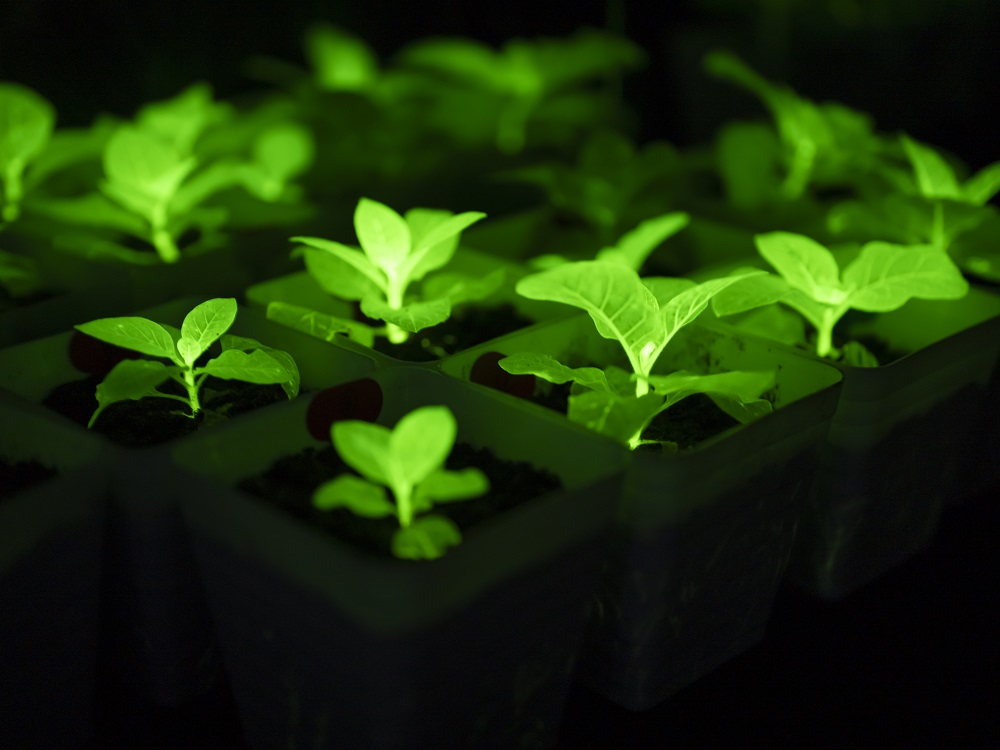
In the evening, the lights had just been turned off in the greenhouse area of the experimental building, and a new generation of luminous plant samples was the first to light up in the semi-darkness. The light slowly spreads along the veins of the leaves. It is neither dazzling nor dependent on any exposure equipment. It only relies on the metabolism of the plant itself to continue to shine.
Li Inhan stood in front of the glass wall and stopped. He is the founder of Shenbi Biology and one of the first researchers in China to invest in the research and development of luminescent plant systems. After more than two years and 532 experiments, from the underlying path to the overall brightness, this breakthrough from Hefei has substantially raised the brightness standard of global plant luminescence research.
Three years to achieve "visible to the naked eye"
When the night mode in the experimental building was just turned on, a new generation of luminous plants took the lead in lighting up. The light slowly emerges from the veins of the leaves and can be seen with the naked eye.
Li Renhan, who was standing aside, was stunned for a few seconds. "It has been the most difficult thing in the past three years to achieve another level of brightness," he said.
In fact, the magic pen creature has already achieved "visibility to the naked eye in the dark" in the previous stage: after turning off the lights completely and waiting for about two minutes for the human eye to adapt, the light can be clearly seen.
However, there are still obvious limitations in brightness. Light can only be distinguished in a completely dark scene and after the naked eye adapts; when taking pictures, you must rely on long exposure to retain the light.
The team's discussion at that time was very realistic: although there have been some cases abroad, they are still at the stage of "can be seen by cameras but not by life". "If the brightness does not increase, it will always be just a concept."
The starting point of the breakthrough does not lie in a certain formula or theory, but in the team's almost stubborn insistence on the goal of "visible to the naked eye". "We set a minimum standard at that time, which must be within the brightness range that the human eye can discern, otherwise it will not be considered a success."
In three years, it went from being "almost invisible" at the beginning, to "seeming to be a little bright" in 2024, to being visible in a low-light environment for the first time in early 2025. Every small change allowed the entire team to continuously rewrite the goal.
Will move towards real application scenarios
Recalling the moment of success, Li Renhan remembered very clearly: It was already late that day, and he was about to leave the laboratory. When passing by the greenhouse, he saw a row of new material sample plants. Out of habit, he turned off the two lights to see if there was any change in brightness.
"It was just like usual at first, and you couldn't see it clearly; as you walked further in, a few leaves were glowing by themselves." He was stunned for a few seconds, and then asked the R&D members to come together.
The R&D team rushed back to the greenhouse one after another, standing in a semicircle and looking at the plants. The light is not strong, but stable and even, and can clearly fall on the edges of the leaves. "No one spoke at that moment, and the scene was so quiet that it was a bit unreal."
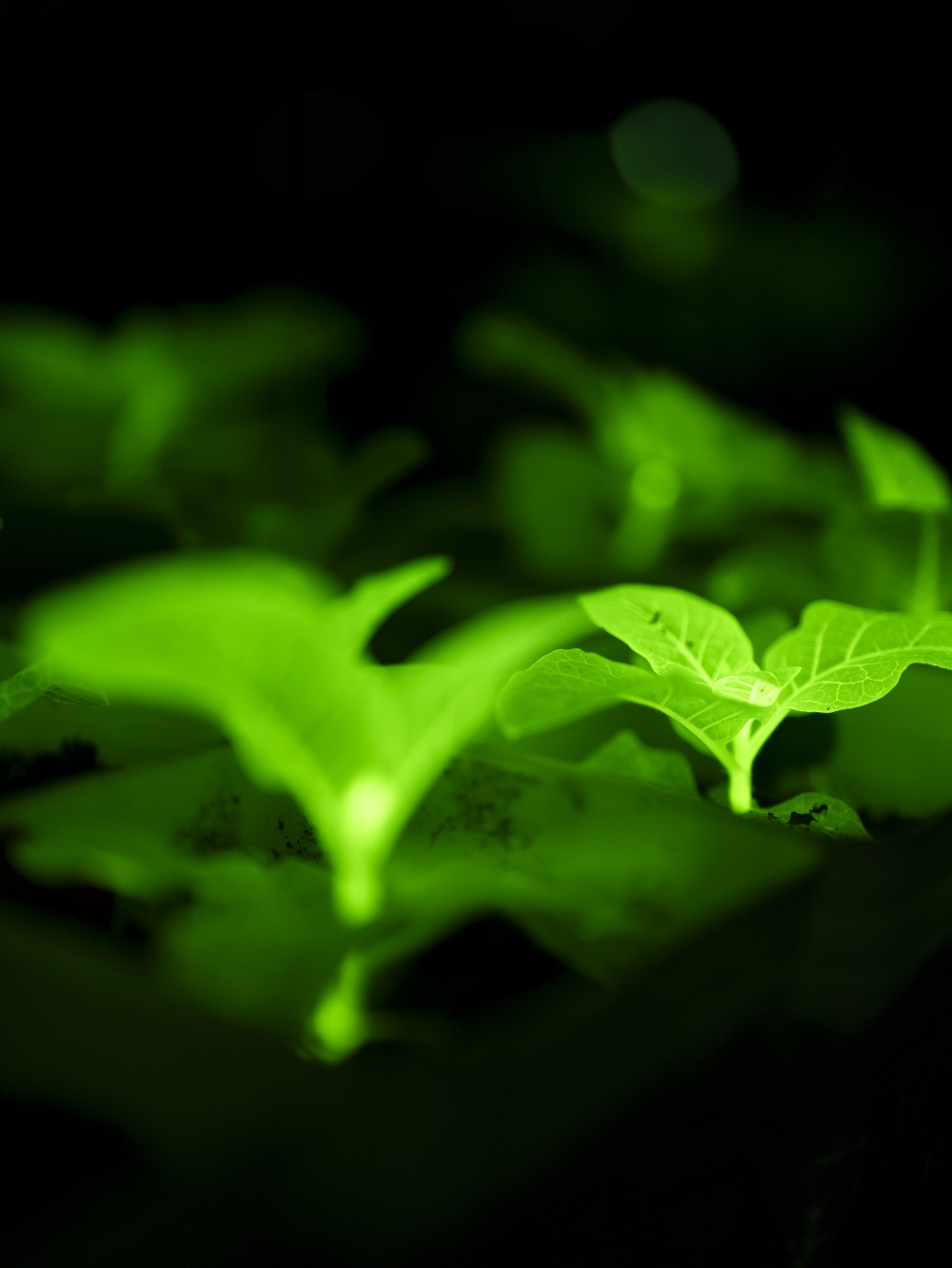
This is the first time the team has seen a luminous intensity that "can be recognized by the human eye without the need for a camera or complete darkness." For a whole week after that, they repeated the lightfastness test every day: Is the brightness stable? Does the light decay after a few hours? Will changes in temperature and humidity affect performance? "The more we test, the more certain it becomes. It is not an accident." This means that for the first time, technology has the opportunity to move towards more realistic application scenarios.
Now, more “realistic” questions are being heard. The museum staff asked if children could see it directly in front of the display case. The scenic area team asked if they could make a field of bright plants beside the trail? Urban nightscape designers asked, can this kind of light be integrated into the park’s nighttime circulation? These problems are all based on the fact that light is bright enough to be seen. Starting in 2025, they will launch large-scale verification in Kunming, Beijing, and Hefei.
During the interview, Li Renhan repeatedly emphasized that luminous plants are not a "technological wonder". "The fact that plants emit light is very soft. It is not as dazzling as lights, but a kind of light from living organisms. We hope that it can enrich people's perception of the night and add a kind of bright light to the city night."
share
WeChat scan code to share
![WeChat QRCode]()

 January 13, 2026
 January 13, 2026
 January 13, 2026