Release time: August 20, 2024 | Information source: He News
In Hefei, plants that glow like fireflies have become a reality. Recently, the R&D team of Hefei Shenbi Biotechnology Co., Ltd. broke through the foreign technology monopoly and continuously iteratively created the country's first gene-edited high-brightness self-luminous plant at night through gene editing technology and other means.
Three or four potted plants glow as brightly as a night light
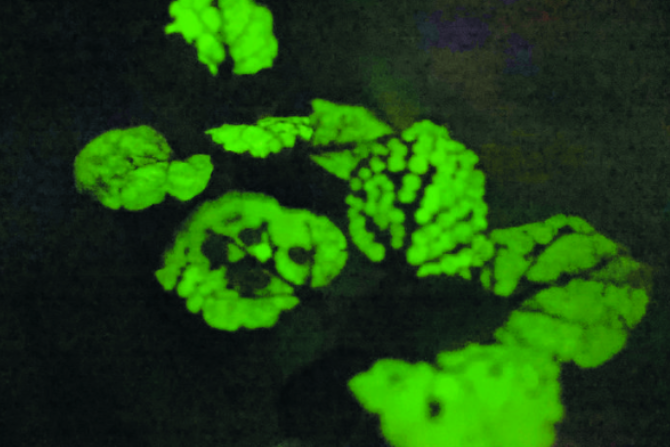
On August 14, the reporter walked into the exhibition hall of Hefei Shenbi Biotechnology Co., Ltd., and several pots of "safflower tobacco" were neatly placed on the display rack. The leaves of the plant were green and small, and there was nothing special in appearance. However, as the indoor lights are turned off, its unique "self-illuminating" properties emerge.
The reporter experienced it on the spot and found that the brightness of the "green light" of 3 to 4 potted plants was about the same as that of an ordinary night light.
"Our team began to understand luminous plants in 2023, and has gone through a total of 532 experiments in research and development." Li Renhan, chairman of Hefei Shenbi Biotechnology Co., Ltd., said, "We transfer the genes of luminescent organisms in nature, such as the luciferase genes of certain luminescent animals or fungi, into plants through genetic engineering technology. These genes produce luciferase in plants. This enzyme can catalyze chemical reactions to produce light, allowing plants to self-luminous at night."
It is worth mentioning that this technology can also be applied to other plants.
In addition to the "safflower tobacco" in the exhibition hall, there are also sunflowers, petunias and other flowers that have also achieved "glow" in their petals and leaves in experiments. Currently, the team is also developing ornamental flowers such as roses, peonies, and lilies. "They are still far from reaching the brightness of safflower tobacco and need to be further optimized. But I believe these products will be available to everyone soon." Li Renhan added.
The output will reach 500,000 plants in 20 days and will be used in various scenarios.
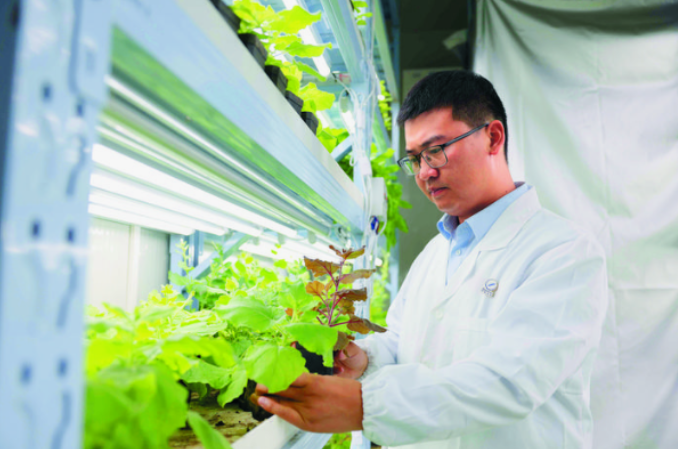
Once the "self-luminous" safflower tobacco was successfully developed, the company quickly put it into mass production and can now produce more than 4,000 plants per month. In order to fully ensure market supply, the company began building a new production line in July this year. "After the new production line is completed, our products can produce 500,000 plants every 20 days." Li Renhan said that the current order volume of "luminous plants" is still rising.
For the future, the team has rich imaginations: every household has luminous "plant pets", which can be used as decorative decoration on family balconies or placed at the bedside to replace traditional night lights; luminous plants can also be used in municipal greening to replace some lighting projects to save energy; or to boost the cultural and tourism industry, they can be planted in large areas at scenic spots to create the magical effect of luminous plants in movies.
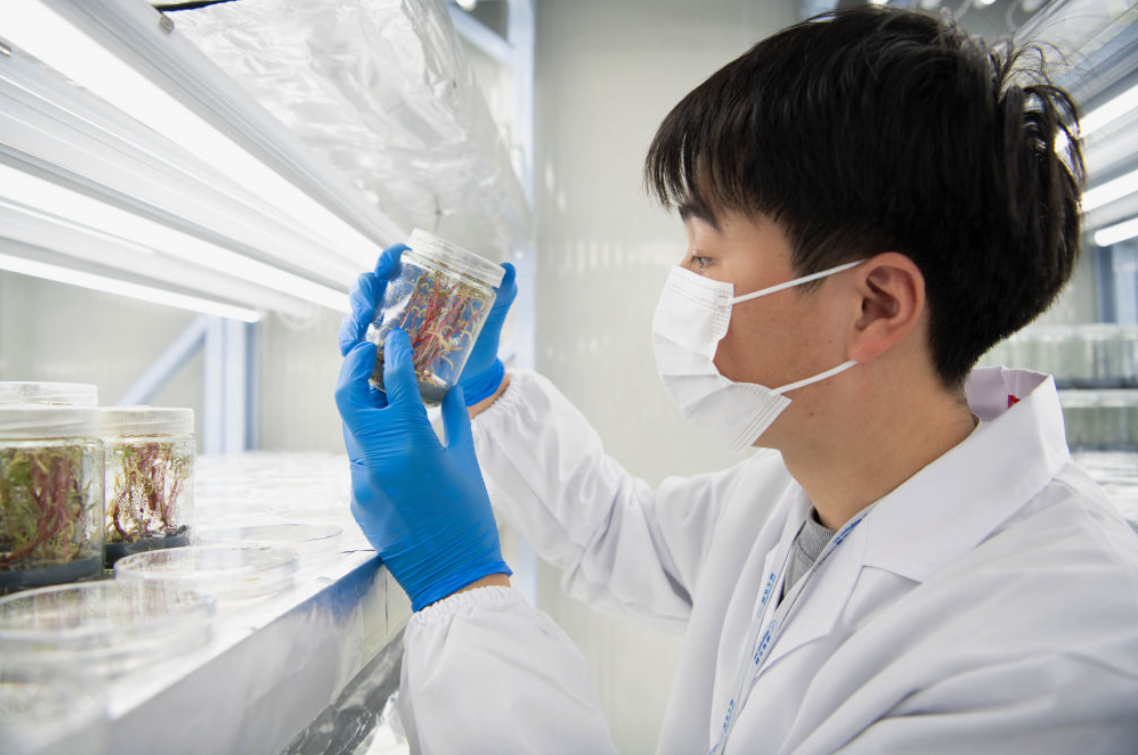
In addition to "luminous plants", after mastering the core technology of gene editing, the R&D team of Hefei Shenbi Biotechnology Co., Ltd. will also bring more possibilities. "For example, some plants we see now are green, but through our experiments, we can turn the plants into red. This red color is actually a symbol of the content of certain xenobiotic substances. Through a unique cell expression platform, we can enable plants to synthesize some purely natural high value-added substances." Li Renhan introduced.
It is foreseeable that after high value-added substances are purified in plants and reach a certain concentration value, they can be applied to the desired drugs. For example, it takes decades to synthesize 1 milligram of paclitaxel in yew trees, but the R&D team can integrate this synthesis pathway into plants that reproduce quickly, or synthesize a batch in 15 to 20 days, significantly shortening the cycle.
In the laboratory, Li Renhan is planning to discuss the next research direction and content with the team. "Currently, production and sales are stable, but our product iteration cannot stop for a moment."
share
WeChat scan code to share
![WeChat QRCode]()

 January 13, 2026
 January 13, 2026