Release time: February 25, 2025 | Source: Dawan News
In Hefei, plants that glow like "fireflies" have been brought into reality by biofabrication. On February 24, a reporter from Dawan News walked into the R&D center of Hefei Shenbi Biotechnology Co., Ltd. (hereinafter referred to as "Shenbi Bio"). A row of seemingly ordinary plants gradually glowed with soft fluorescence in the dark. The company's founder Li Renhan said that it has now entered mass production and has entered the industrialization stage. More than 10,000 fluorescent sunflowers have been sold in the past week alone.
From a team of only 3 people at the beginning, it has now settled in the Silicon Valley of HKUST and has a R&D and production center. The entrepreneurial innovation story of this young team is like those quietly glowing plants, blooming in Hefei, a hot land of science and innovation.
Marvel: Dark houseplants glow like moonlight
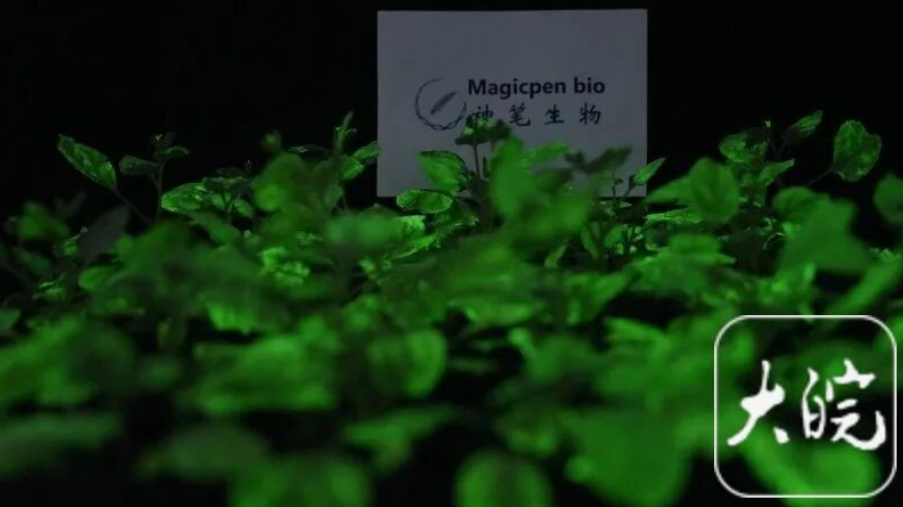
On the afternoon of February 24, a Dawan News reporter came to the Shenbi Biological Research and Development Center. In the plant growth room, after everyone stood still, the staff turned off the lights. As the surrounding area fell into darkness, the staff said that they needed to wait patiently for a few minutes because it was a biological reaction. After a while, a soft silver light gradually appeared in the darkness, and this was the shimmer of sunflower petals that began to emit, and then the moonlight-like white gradually appeared in the darkness. But captured through the lens, the photo shows a mysterious green hue.
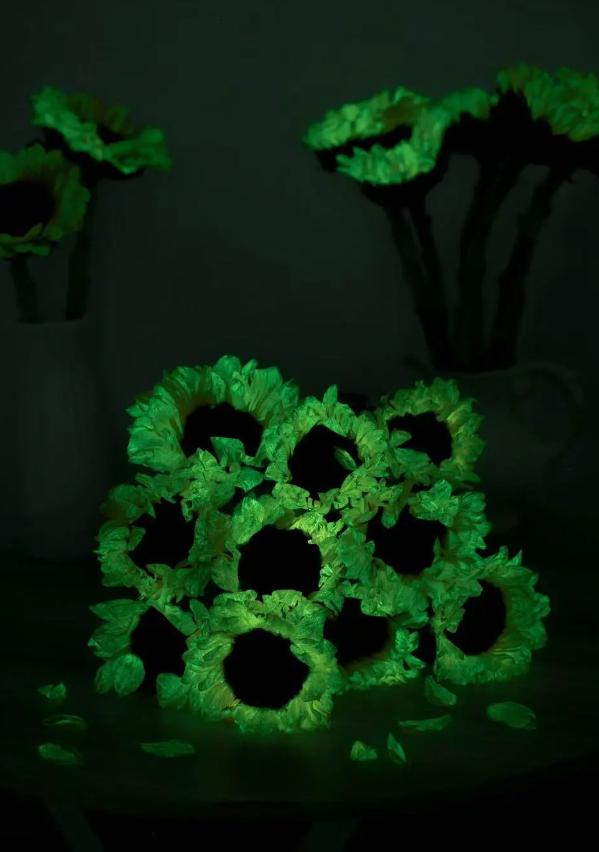
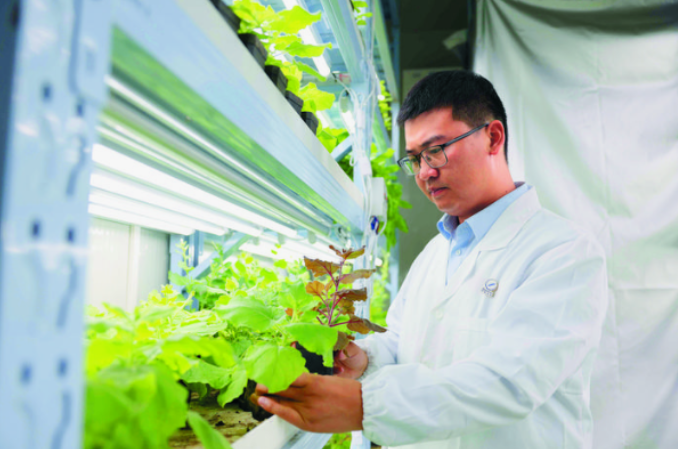
What kind of "black technology" are hidden in these "glowing sunflowers" and other luminous plants? According to on-site staff, plants can emit light by themselves because scientific researchers have transferred the genes of luminescent organisms in nature into plants through genetic engineering technology. These genes are expressed in plants and produce luciferase, allowing the plants to emit light at night. "In addition to fireflies, the genes of deep-sea luminous organisms are also the subject of our research." The staff said that different plants may affect the intensity of their luminous effects due to differences in cell environment and growth conditions. In this process, researchers need to conduct a lot of experiments and attempts.
In August last year, the Shenbi Biological R&D team broke through the foreign technology monopoly and continuously and iteratively developed the first gene-edited high-brightness self-luminous plant in the country. "In the tough phase, more than 500 attempts were made, and the team behind it was not giving up." The staff said that through the continuous efforts of R&D personnel and the continuous optimization of technical solutions, these things that sound like science fiction have been brought into reality by biomanufacturing.
Mass production: Sales exceeded 10,000 plants one week after the production line was launched
"The entire first and third floors here are R&D centers." Li Renhan, founder of Shenbi Biology, said that relying on the Silicon Valley of HKUST, they now have their own R&D center and production center. They are busy running around every day, but seeing the products on the market is worth it no matter how tired they are.
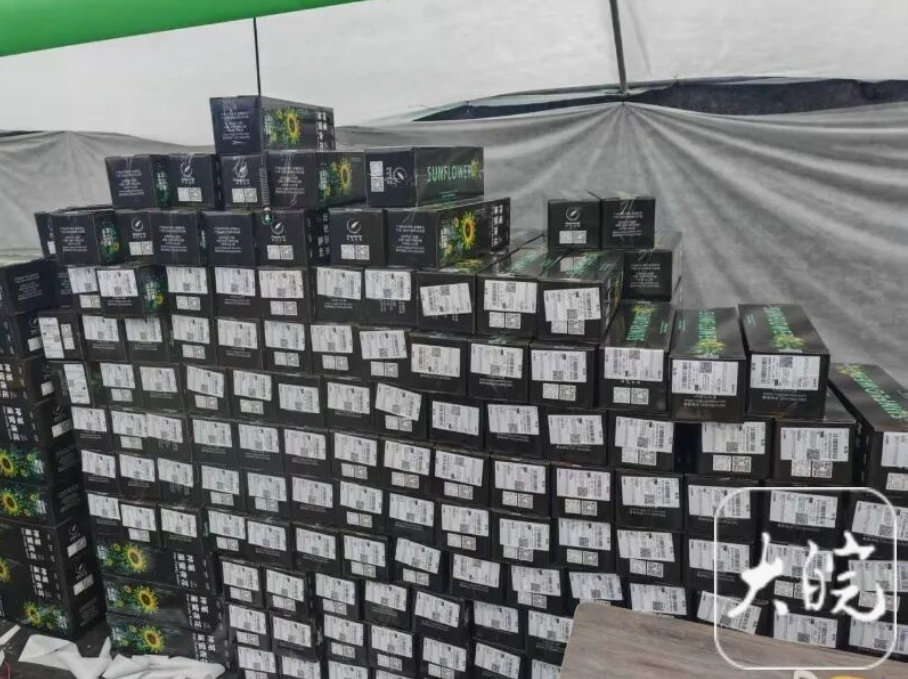
In the Shenbi Biological Research and Development Center, fluorescent sunflowers not only grow towards the sun, but also bloom with charming light in the dark. According to Li Renhan, the self-luminous plants currently on the market are mainly fluorescent sunflowers. Since their launch, sales have exceeded 10,000 plants within a week, and they are very popular among consumers. Its marketing strategy is a two-pronged approach, relying on multiple social platforms for widespread online communication, and offline cooperation with major manufacturers to use this unique sunflower as a special gift, further expanding its market influence.

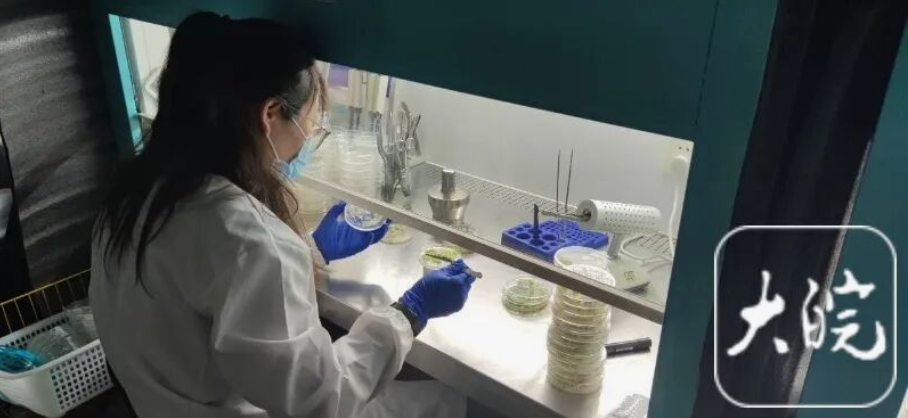
"There are eight or nine laboratories like this here." At the gene introduction center, Li Renhan told reporters that there are rows of petri dishes in which various types of plant cells are bred. The fan installed in the room rotates gently to ensure air circulation and provide a suitable environment for cell growth. Li Renhan introduced that the gene introduction center is the core of the company's technological innovation. Through advanced gene editing technology, the R&D team has successfully achieved high-brightness self-luminescence on a variety of plants, including sunflowers.
Entrepreneurship: Getting connected with HKUST Silicon Valley through a reply letter
"At that time, with the attitude of giving it a try, I sent a letter to Hefei High-tech Zone, but I didn't expect to receive a reply very quickly." When talking about his entrepreneurial experience, Li Renhan was quite emotional. Li Renhan told the Dawan News reporter that after graduating from China Agricultural University, the doctor had the idea of starting a business. The entrepreneurial team only had three people. He and his two classmates heard that Hefei, Anhui had a strong atmosphere of innovation and entrepreneurship, so they sent an entrepreneurial consultation email to the message box of the official website of Hefei High-tech Zone. The reply strengthened his determination to come back and start a business.
Li Renhan recalled the first time he came to HKUST Silicon Valley. At that time, he visited the park environment and learned about relevant policy support. This new innovation platform with the transformation of scientific and technological achievements as its core provided him with full-chain support from laboratory preparation to industrial docking. Li Renhan said that with the help and recommendation of HKUST Silicon Valley and relevant government departments, he had negotiated investment matters with more than 20 investment institutions.
"Currently, a production line has been built in Luyang District, Hefei." Li Renhan said that in 2024, the company completed two consecutive rounds of tens of millions of yuan in financing, with investors including Meihua Venture Capital, HKUST Silicon Valley Fund, etc.
Future: Explore more application scenarios of self-luminous plants
The team has expanded from the initial 3 people to more than 20 people now, and also has a R&D center and a production center. Li Renhan admitted that he is busier than before.
Li Renhan said that more than 50% of the company's R&D personnel have master's degrees, and the average age of the core team is less than 30 years old. Although there have been personnel changes, more people have chosen to stay. Regarding the weekly sales volume that has exceeded 10,000, Li Renhan said that from research and development to mass production, this is of great significance to the entire team. The company is currently opening up the market through a combination of offline and online methods. There are many offline orders, and it has signed contracts with the live broadcast team online. It will also build its own online sales platform in the future. The team is also developing products for ornamental flowers such as roses, peonies, and lilies.
"We hope to see a variety of luminous plants appear on the market in the future." Li Renhan said that luminous plants can be used in home decoration, park and municipal road greening, etc. This technology has broad application prospects. The company is negotiating cooperation with a number of scenic spots, and plans to create immersive night tour projects such as "Glowing Flower Sea" and "Fluorescent Lotus Pond" in the future.
Li Renhan said that luminous plants may change the nighttime landscape of future cities and open up new industries and scientific research directions in the field of plant green lighting.
share
WeChat scan code to share
![WeChat QRCode]()

 January 13, 2026
 January 13, 2026
 January 13, 2026